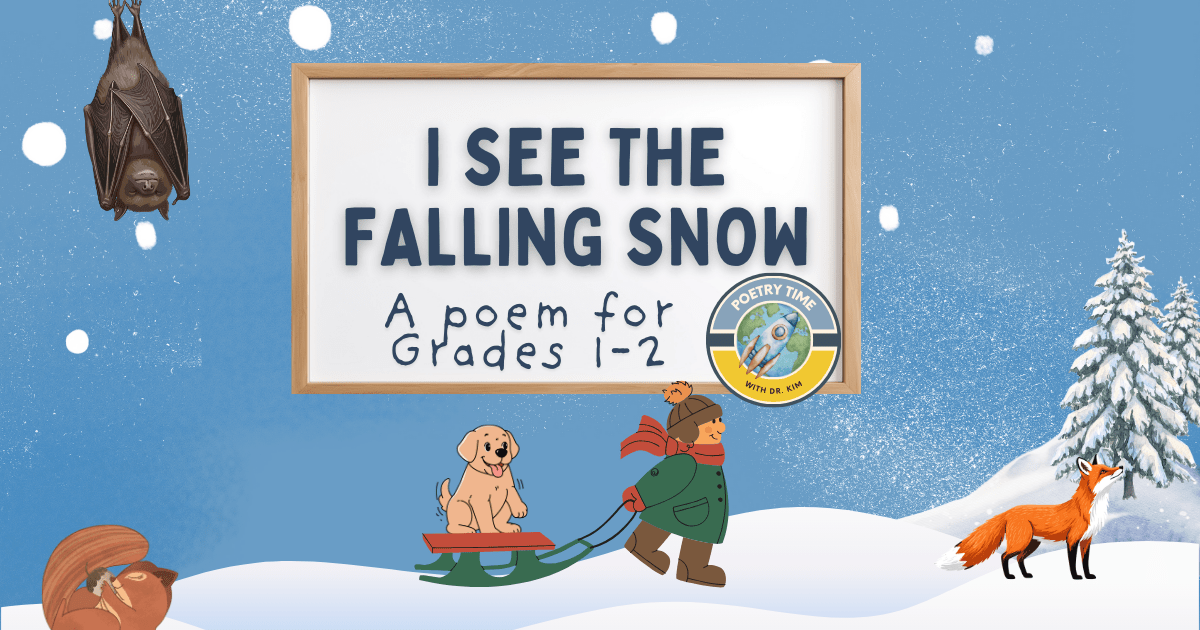
I See the Falling Snow, Poem, Grades 1-2

Hi fellow teachers! “I See the Falling Snow” is a short poem you can use in your Grade 1, Grade 2 or split grade classroom as a poem of the day, time filler, or to complement language or science lesson goals. It features information about the following animals found in Canada: red fox, Eastern chipmunks, and little brown bats.

See the teaching ideas below and grab the PPT version or print-ready PDF to best suit your needs. You have full permission to use the poem for teaching purposes within any educational setting, including online learning and homeschool.

Let me know if you use the poem – I’d love to hear how it goes.

Watch a video of the “I See the Falling Snow” poem below.

“I See the Falling Snow” 

I see the falling snow
Grab my boots, ready to go
It’s time to build and slide
Jump aboard, let’s go for a ride

I hear the crunchy snow
Swish my tail, feel my coat grow
It’s time to trot and leap
Hunt for prey, then curl up and sleep

I feel the slushy snow
Store my snacks, buried down low
It’s time to nap and rest
Snuggled up, all safe in my nest

I smell the distant snow
Calm my breath, keep my heart slow
It’s time to hang and roost
Lick the walls to give me a boost

I taste the powdery snow
Watch the sky put on a show
It’s time to yawn and doze
Head inside and warm up my toes

Original poem by Kim T. Harrison. Video created in Canva.

Teaching Ideas. Use the poem …

  • As a bell ringer, time filler or post-recess moment of focus. Let the video play while you tidy or prep.
  • To complement assignments and activities about which animals hibernate: ask students to create “Are/Do,” “Can,” “Why” and “How” questions about each of the animals featured in the poem. For example: Do red foxes hibernate? Note: red foxes don’t hibernate; eastern chipmunks hibernate lightly – they wake for snacks; little brown bats hibernate fully but can wake to lick water from their cave walls to stay hydrated.
  • To practice inquiry questions. Prompt your students to ask “I know” and “I wonder” questions about animals in winter.
  • To practice inference: without showing students the video, ask them to guess which animal is featured in each stanza. Then use the video to see which ones they guessed correctly.
  • To introduce fun art activities about winter weather in Canada: ask students to draw a picture of what they can see in winter in their neighbourhood.
  • To connect to sensory activities: What does snow look like? What does it feel like? Taste like? Etc.

Looking for more winter-themed poems? You may also like my “Winter Fun” poem here.

A Winter Sky Poetry Prompts

Hi there fellow poets. Let’s look up this winter and take inspiration from the sky for some new poem drafts. There are 3 full-poem prompts below, each with 3 “ways to play” ideas to get you started or invite you to try a different approach to your poem.

Let me know if you use these prompts – I’d love to hear how it goes or read your poem.

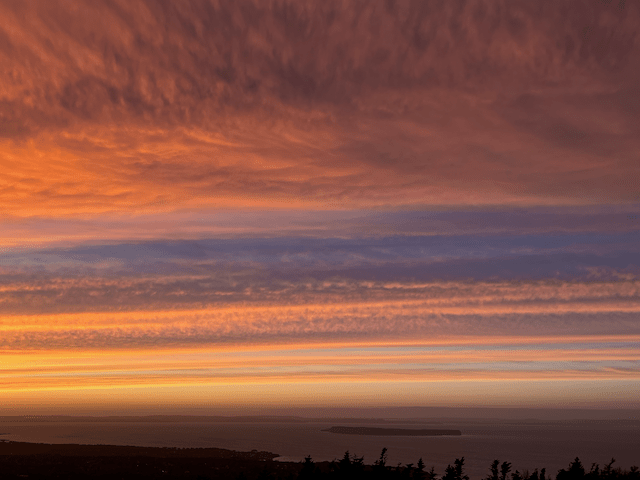
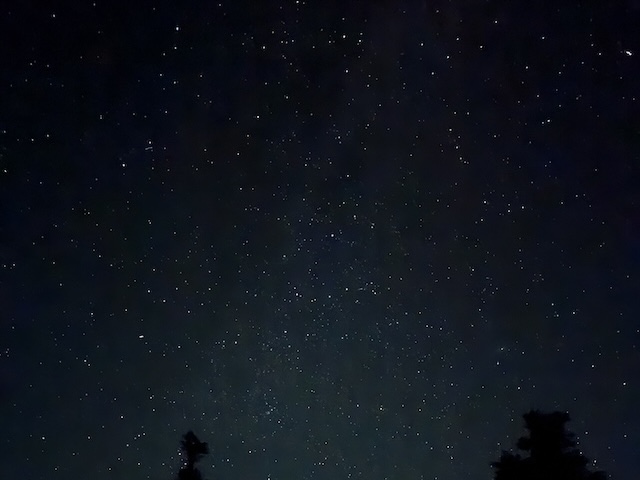
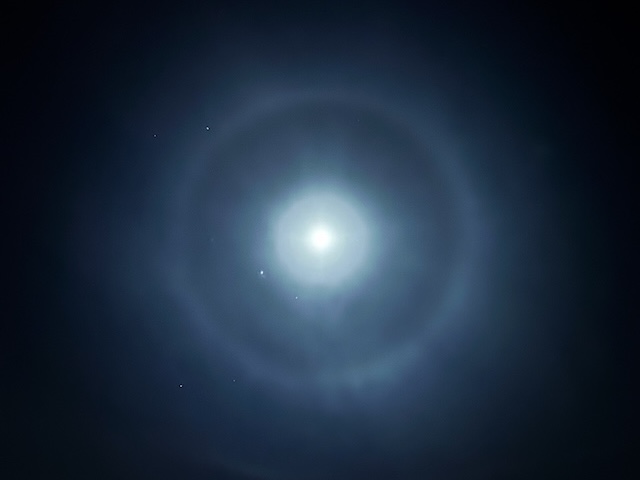
For each prompt, use the photo given or look up at the sky where you currently are.

Prompt 1

Write a poem about the quality of sunlight in a winter’s sky.

winter sky poetry prompts

Ways to Play

  • Explore how the sunlight contrasts with any clouds you see. Think about how they exist together. Brainstorm some words to describe this contrast and take one or more of the words as your starting point for the poem.
  • Think about the function of sunlight in winter compared to summer. Brainstorm words to describe its strength and function, then take one or more of the words as your starting point for the poem.
  • How does the winter sun affect you? How do you feel when you notice the sun trying to break through the clouds? Try to capture these feelings in a poem.

Prompt 2

Write a poem about the sky at dawn or dusk.

winter sky poems

Ways to Play

  • Notice and brainstorm words to describe the colours of the sky. If possible, observe the sky for 15-30 minutes and notice how the colours change. If there are clouds, look at how the clouds change. Write a “time lapse” poem capturing the changing colours.
  • What feelings does the sky evoke in you? When the days are short, how do you feel when you see the sky lightening in the morning or darkening in the afternoon? Try to capture these feelings and their importance to you in a poem.
  • How does the sky at dusk or dawn affect the natural environment close to you? If possible, listen to bird or animal sounds while watching the changing sky. What do you notice? If you’re in an urban environment, do you notice any change in sound at dusk or dawn? Focus on the connection between the sky and other elements of your environment in your poem.

Prompt 3

Write a poem titled “A Winter Sky at Night”

Ways to Play

  • If possible, go outside and feel the winter air while observing the sky. Then, in your notebook, brainstorm words to describe the air in one column and words to describe the sky in a second column. Look for 2 words that surprise or delight you when you see them together. Use these 2 words as the starting point for your poem.
  • Focus on the moon and stars, then challenge yourself to write a poem in a different style to your usual poems or try out a form you don’t often use. For example: try writing an acrostic poem using “WINTERSKYATNIGHT” as your starting letters, a sonnet about the moon and stars, or use the second-person “you” to create a poem speaking directly to the moon and stars in the night sky.
  • Can you think of – or imagine – a time when you had strong feelings about the night sky? Write a narrative poem telling the story of how you felt about the night sky and why. Did these feelings change over the course of the night or several nights? Use the first-person “I” for the speaker or a third-person pronoun (they, she, he) to tell the story.

Bonus Prompt

Challenge yourself to write a poem titled “A Month of Winter Skies.” Observe and track the winter sky for a month, noting down your daily observations. Write a poem about how the sky changes over the course of the month.  

You might also like “Winter Birds Poetry Prompts.”

Write Your Own Light: Poetry Prompts and Exercises

Hi there fellow poets,

Here in the Northern hemisphere, it’s the darkest time of the year, so these poetry prompts invite you to spend some time focusing on what “light” means to you. Use them as part of your poetry writing practice, to spark new ideas, or as part of a reflective mindfulness practice.

Some ideas to bring mindfulness to your poetry writing:

  • Choose a place to write away from to-do lists and your usual routine
  • Do a short meditation or EFT Tapping sequence before your start writing
  • Take a deep breath in and out
  • Light a candle to signal you’re ready to start

If you’d prefer to write away from a screen, download and print the free PDF below.

Let me know if you use these prompts – I’d love to hear how it goes or read your poems.

Step 1

Before we write a full poem, let’s warm up our poetry muscles with a few exercises.

Free write any words that come to mind when you think of “light.” Don’t self-edit or judge the words – let them emerge onto the page. Write for one minute or until you reach 10 words.

Step 2

Finish these similes related to light. Don’t overthink them – just write down what comes to mind.

  • The one candle glows like …
  • Stars twinkle like …
  • The light, as … as …

Step 3

Let’s generate some more words, but this time we’ll move between the concrete and the abstract. Draw three columns in your notebook (or use the free PDF download below). Label the columns: “concrete nouns,” “abstract nouns,” “verbs.” Focus on one column at a time and set your timer for one minute or write until you reach 10 words in each column.

In the column titled “concrete nouns” write as many objects or tangible items you can think of related to the word “light.” For example: light bulb, headlight. Next, in the column titled “abstract nouns” write 10 or more feelings, ideas, or states of being that are connected to light. For example: hope, warmth. Finally, in the column titled “verbs” write 10 or more verbs connected to light. For example: glow, shine.

As before, don’t self-edit or judge what comes out of your mind or pen. Let the words flow.

Step 4

Now let’s write some poetry, starting with a couplet. Choose one concrete noun, one abstract noun, and one verb from your lists in Step 3 and write two lines that incorporate all three words.

Step 5

Repeat Step 4 with three new words from your list, but this time write a four-line stanza.

Step 6

If Steps 4 or 5 sparked a good poem idea for you, keep writing!

Or, use the full poem prompts below to draft a new poem about light. Interpret the prompts in whatever way feels right to you.  

Full poem prompt 1

Write a poem about where you find light on dark days.

Full poem prompt 2

Write an extended metaphor poem about what light means to you. (You can choose one of the ideas you noted in Step 3 or spend a few minutes brainstorming how to finish this line: “Light is …”)

Full poem prompt 3

Write a narrative poem about a time light seemed to be flickering or dimming, but the speaker stayed focused on the light to keep it lit. (For an extra challenge, use the second-person (“you”) or third-person (“she” “he” “they”) pronoun for this poem instead of the first-person “I”.)

Full poem prompt 4

Write a poem about natural light sources. Focus on one light source (the sun or moon, for example) or include as many light sources as you can think of. Try to capture how the light source interacts with its environment, using some hard-working verbs. For example: look at the stars in the night sky and write down 5-10 verbs to describe them. (For an extra challenge, focus on more than one sensory detail in your poem. For example, could you bring in descriptions connected to sound or touch as well as how the light source looks?)