Hi there fellow poets and writers. Have you ever taken a walk through a forest in fall and wondered who – or what – might live inside an old tree trunk or under a cozy looking rock? Use the photos and prompts below to spark your creativity as you write about the creatures – real or imagined – who live in the forest.
The prompts are suitable for beginner as well as more experienced writers in any genre looking for short warm-up writing exercises or prompts for generative writing practice. The “Play Some More” prompts can also be used to practice connecting a character to a setting, and invite you to get even more curious about the characters you create.
Scroll to the end to find a free printable PDF version of these prompts if you’d prefer to write away from your screen.
Happy writing! Kim xo
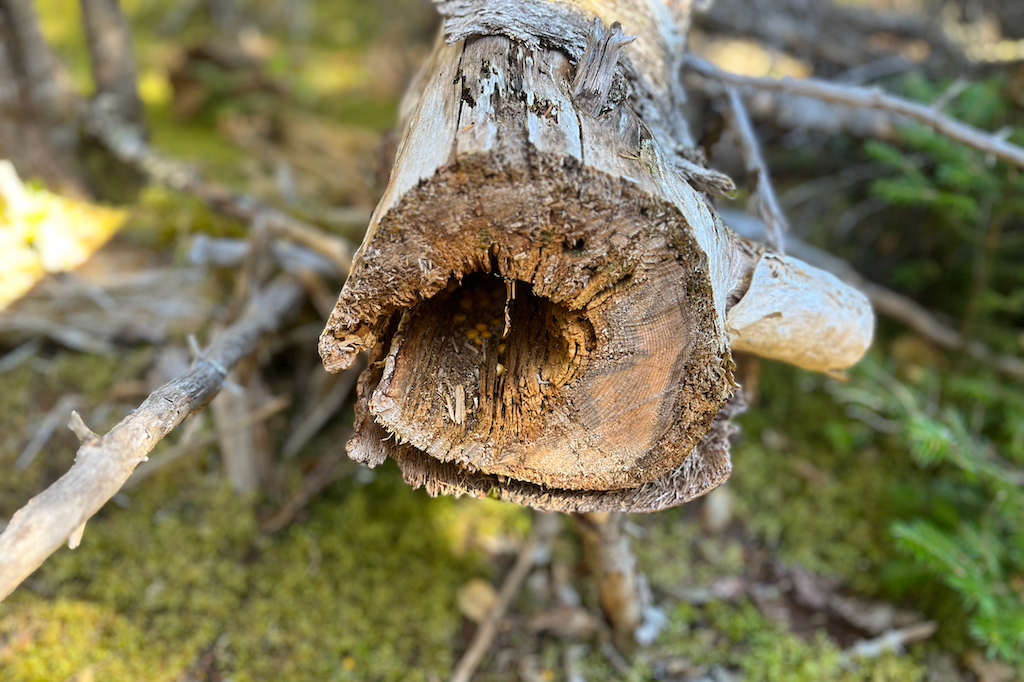
Who lives in this hollowed out tree?
Set your timer for 3 minutes and free write about who or what might live here.
Play Some More
Answer the following questions to learn more about your character and how they live in the hollowed tree:
- How tall is your character?
- What do they wear?
- What are their feet like?
- Do they need any special features to avoid getting wood splinters?
- If you were to thread a camera into the tree cavity, what would you see? (I.e., what does their “home” look like inside?)
- How do they get from the tree to the ground?
- What is their name?
Who lives in this rock hole?
Set your timer for 3 minutes and free write about who or what might live here.

Play Some More
Answer the following questions to learn more about your character and how they live in the hole in the rock:
- Does your character have skin or another covering on their body? What does it look like?
- What sound does it make when your character walks or moves around?
- Does your character live alone or with others?
- Is the rock a temporary home or a permanent home?
- What does your character feel about the rock? (I.e., do they enjoy living there? Is the rock their dream home?)
- How old is your character?
- What is their name?
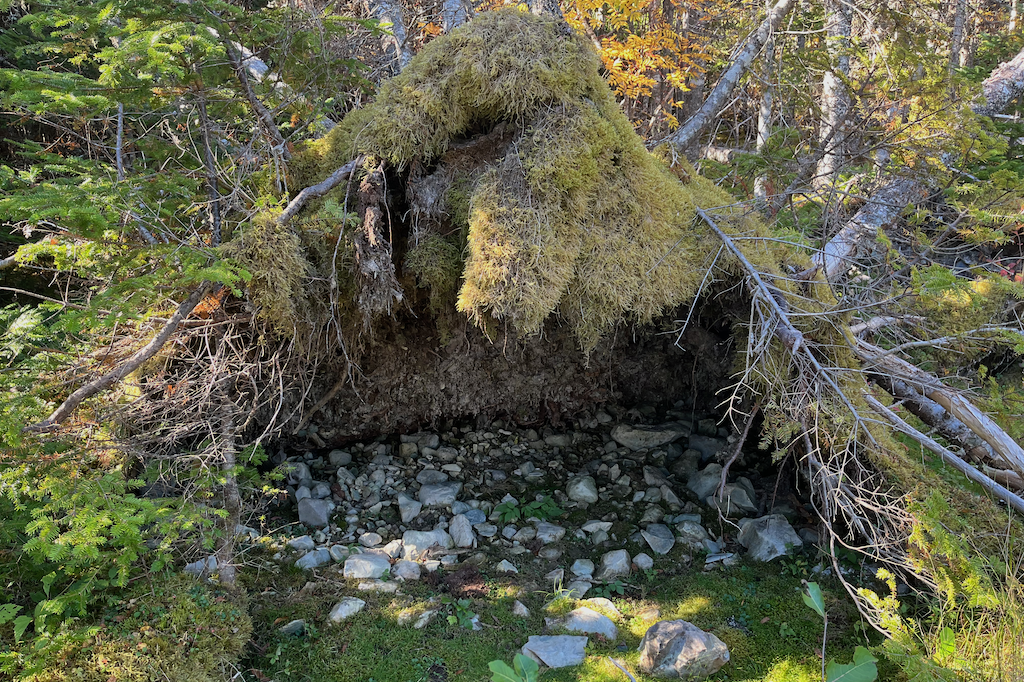
Who lives in this upturned tree?
Set your timer for 3 minutes and free write about who or what might live here.
Play Some More
Answer the following questions to learn more about your character and how they live in the upturned tree:
- In the image, human eyes see rocks and moss – what does your character see when they look at this image? (For example: are there buildings or pieces of furniture that are invisible to the human eye?)
- How does your character use the moss? Is moss a practical resource in their world or maybe revered as sacred?
- When and how does your character sleep? What does their bed or sleeping area look like?
- What does your character do during the day – or night? Do they have a job?
- How does your character get around? Do they use any type of motorized transportation? What does this look – and sound – like?
- What is your character’s name?
Who lives in this discarded metal object?
Set your timer for 3 minutes and free write about who or what might live here.

Play Some More
Answer the following questions to learn more about your character and how they live in the discarded metal object:
- To the human eye, this looks like a discarded appliance of some sort, but what is it really and how does your character use it?
- Does your character live here alone or with others?
- Is your character hiding from someone or something? If so, what protections have they put in place in and around their home?
- What does your character do in winter? Do they feel the cold? How do they stay warm, if needed?
- How does your character communicate with others? Do they speak a language? What are some of the sounds or words?
- How does your character record important information? Do they write or use another means?
- What is your character’s name?
Download a printable version of the writing warm-ups here:
All photos in this post are copyright (c) Kim Harrison, 2025.